
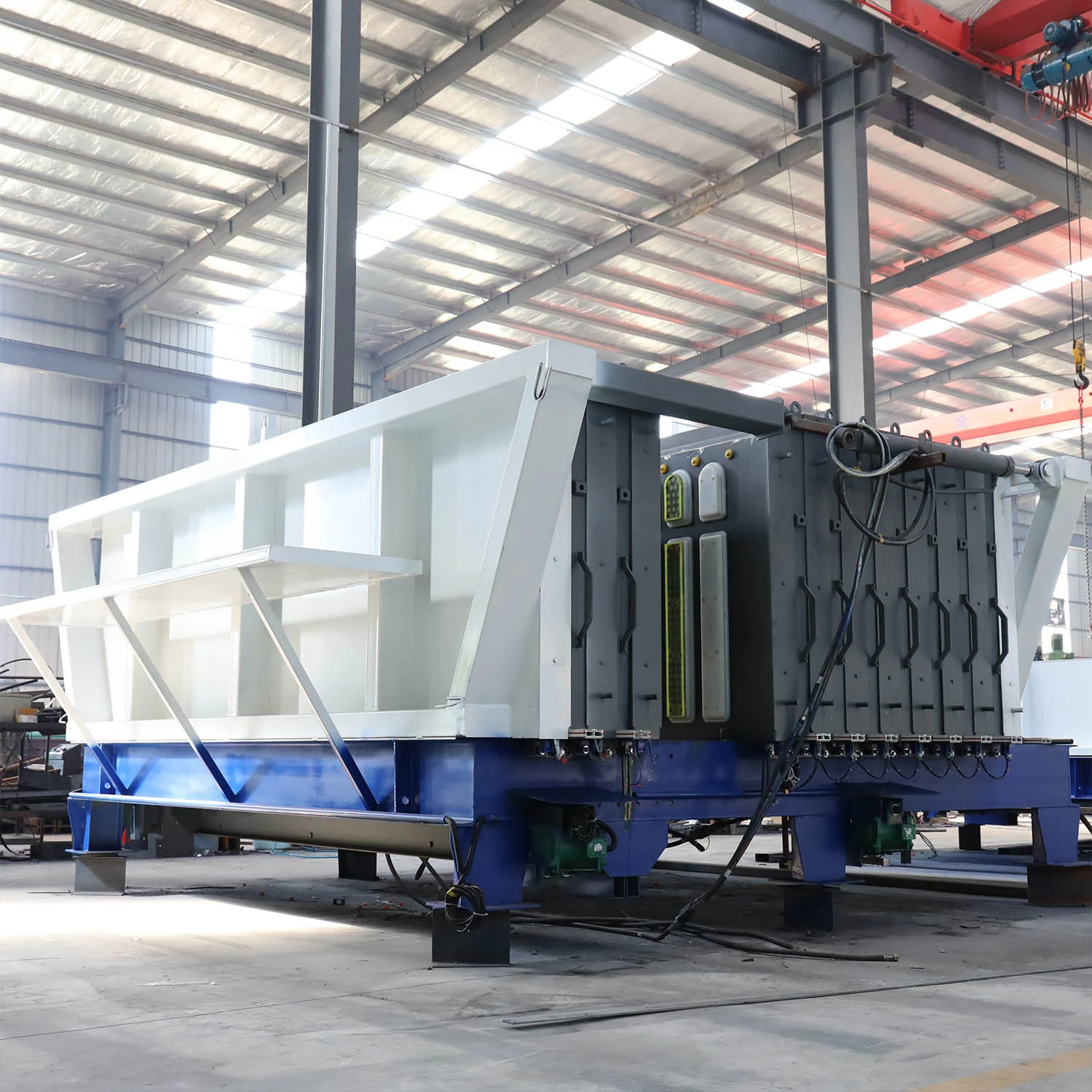
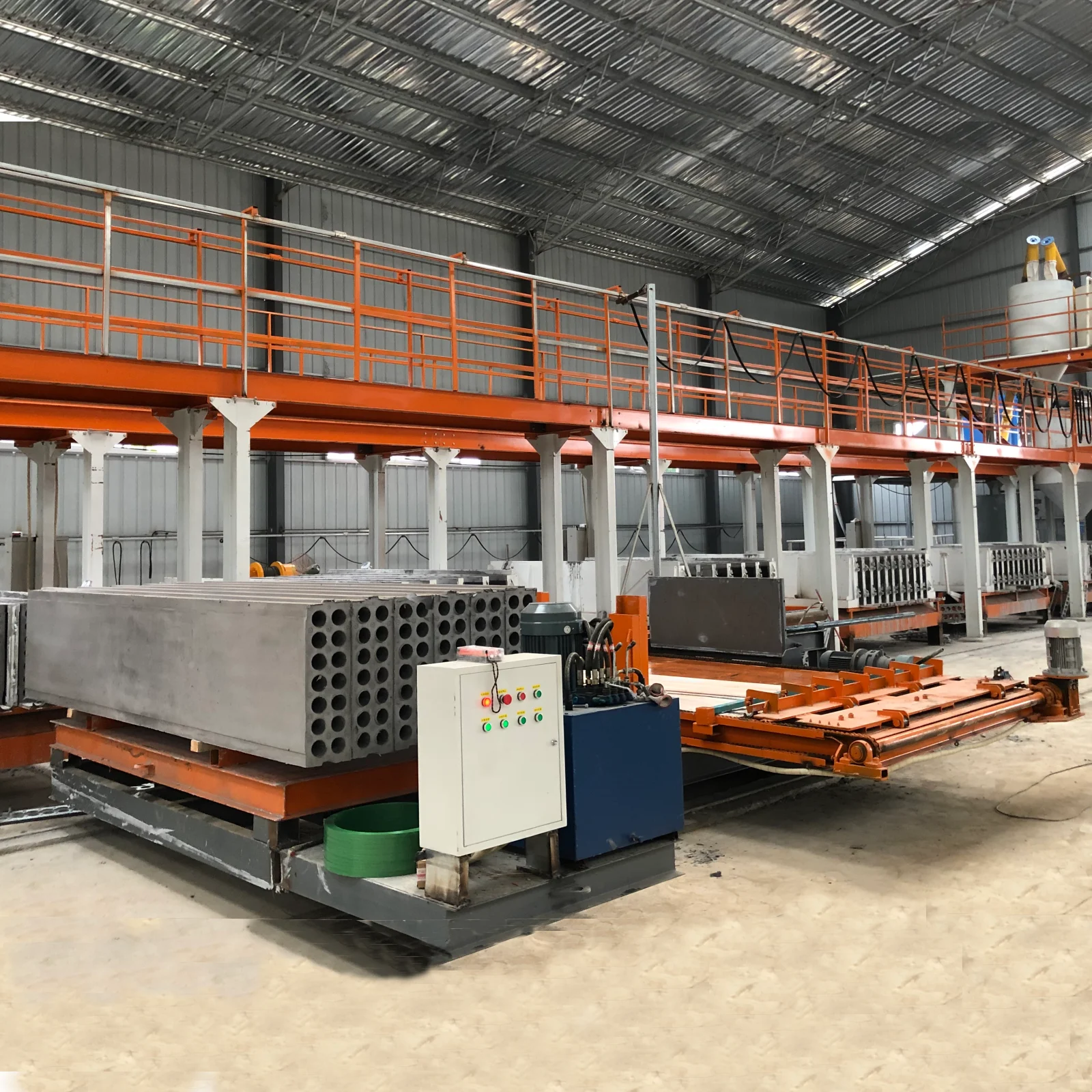
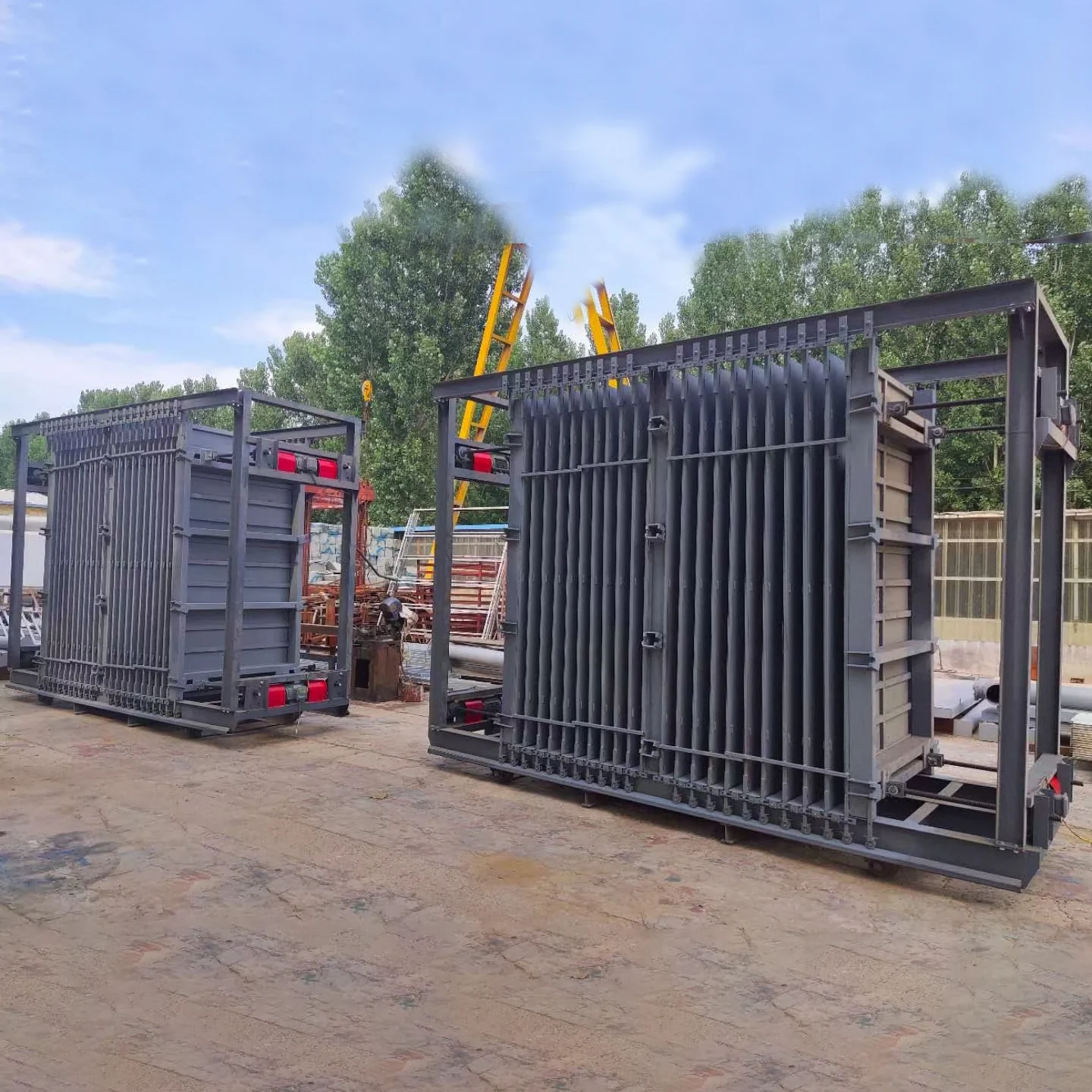
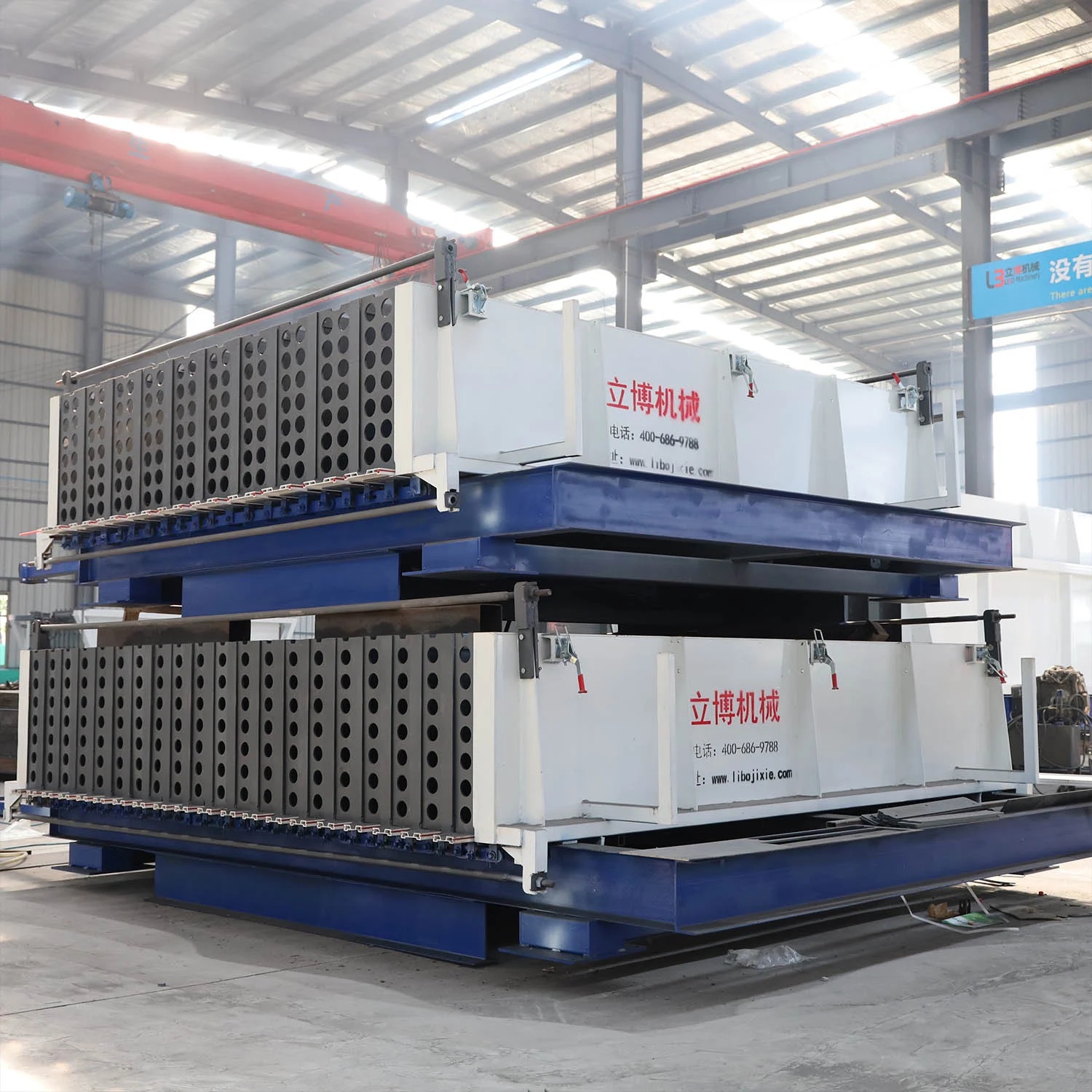







Composite wall panel production line.
The Libo Composite Wall Panel Machine is a highly automated and intelligent system for producing high-performance, eco-friendly composite building materials.
The equipment features precise automated control for mixing and forming, integrated with advanced environmental protection and waste recycling systems. It produces composite panels that are lightweight, high-strength, and possess excellent sound insulation, thermal insulation, and fire resistance, making them the ideal choice for modern commercial and high-rise construction.
Description of production line
Composite wall panel production line, someone call it EPS granule concrete wall panel production line, EPS granule cement composite wall panel equipment, EPS granule cement wall panel machine, EPS granule vertical type wall panel mold.
It consists of eight major systems: Storage system; Feeding system; Weighing system; Mixing system; Distribution system; Forming car; Plate output system; Stacking system.


Process of production
Cementitious materials (Cement) →Loading machine (screw conveyor) →weighing system (powder, granule and water measurement) →mixing system (special mixer) →distribution system (special distribution machine) →forming system (special vertical mold truck) →board ejection system (special plate output machine) →stacking system (transporting forklift).
Introduction of project
EPS granule cement composite wall panel machine is the replacement product of traditional brick making machine. The wall panel it produces can replace clay bricks, cement bricks and bread bricks. And has the following six major advantages:
-
1
1)Light weight. Its weight is half of traditional clay bricks, suitable for high-rise buildings. -
2
Lower cost. Because it doesn’t need to be fired, just solidifies naturally, saving fuels and being economical and environmentally friendly -
3
Construction is twice times faster, eliminating the cost of laying bricks and plastering. -
4
The sound proof effect is better. The sound proof effect of a 10 cm thick wall panel is 5 decibels higher than that of a 24 cm thick clay brick wall. -
5
To save floor space, use 10-centimeter-thick wall panels as indoor partition walls instead of traditional 24-centimeter-thick brick walls. Each 100 square meters of house type can increase the effective use area by about 10 square meters. -
6
There is no need to wait for decoration, you can decorate and use it directly after handing over the house. Because the wall panels are produced in the factory in advance and have been dried. It completely solves the problem of mold falling off after decoration due to the fact that the wall is not dry and contains moisture.


Raw materials used
The raw materials
1)Cementitious materials: ordinary Portland cement, fast-hardening sulfoaluminate cement, magnesium oxychloride cement, magnesium sulfate cement
Filling material
2)Filling materials: EPS granule, fine sand, formed agent
Floor space and the number of employees
-
1
Annual output: The production volume of a set of 10 mold trucks is 1000 square meters. The actual production days every year are calculated as 300 days. Annual output = 1000 square meters per day × 300 days = 300,000 square meters. -
2
Need the space about 1,000 square meters -
3
Only need three to five workers.


profit margin
According to the experience of many years and the different price of raw materials in different areas, the following conclusions are drawn:
The profit margin per square meter of wall panels is normally 15-20 yuan per square meter, but some areas can be 40 yuan per square meter.
There is a basic rule, if the cost of raw material is low, the selling price of wall panel will be low. If the cost of raw material is high, the selling price of wall panels will be high. If the profit of per square meter in the production industry is less than 20 yuan per meter, it is inconsistent with market rules.
General FAQs
Q:What is lightweight concrete partition wall panel Machine?
A:Lightweight Concrete Partition Panel Machine is an automated/semi-automated system specifically designed for manufacturing concrete wall panels. Its core function involves using cement or gypsum as the binding agent, combined with fly ash (or slag, pozzolan, construction waste, stone powder, and other waste residues). Through an integrated process of “material mixing – mold forming – curing and demolding” integrated process to create lightweight, high-strength, sound-insulating precast partition panels. These panels are widely used for interior partitioning and non-load-bearing wall construction in buildings.
Q:What is Cement Wall Panel Machine?
A:Cement Fence Panel Equipment is specialized in automated/semi-automated production machinery designed for manufacturing precast cement fence panels. Through the core process of “raw material mixing – mold forming – curing and demolding,” it transforms cement, sand, gravel, and other materials into standardized fence panels. These panels are widely used in scenarios such as factory perimeter fencing, construction site barriers, livestock enclosure fencing, and residential community courtyard walls.
Q:What types of wall panels can it produce?
A:Lightweight concrete partition wall panel equipment can produce cement hollow wall panels, cement solid wall panels, composite sandwich wall panels, expanded clay aggregate concrete wall panels, EPS particle cement wall panels, gypsum wall panels, and more.
Cement fence panel equipment can produce cement perforated fence panels, cement mushroom stone fence panels, cement flat fence panels, cement fence posts, post caps, and more.
Q:What are the standard panel sizes it can make?
A:Lightweight concrete wall panels are commonly manufactured in the following dimensions: Length: 3000mm Width: 600mm Thickness: 60mm/75mm/90mm/100mm/120mm/150mm/180mm/200mm Custom sizes are available upon request. Please contact our customer service manager for further assistance.
Q:What are the main components of the machine?
A:The production line is divided into the following sections: 1. Raw material storage tanks 2. Raw material conveying system 3. Metering system 4. Mixing system 5. Automatic control system 6. Pouring system 7. Wall panel forming molds 8. Core-pulling system 9. Automatic panel demoulding and stacking machne 10. Electrical operating tracks
Q:What raw materials are used for panel production?
A:Cement Wall Panels: Cement + Sand + Gravel
Lightweight Partition Panels: Cement + Fly Ash (or slag, pozzolan, construction waste, stone powder, etc.)
Q:How much space is needed for installation and production?
A:The installation and production space for concrete wall panel machines requires over 500 square meters, with significant variations depending on production capacity—ranging from small-scale, simple equipment to ultra-large-scale production lines. We will provide you with detailed answers.
Q:How does a concrete wall panel machine work?
A:The core operational logic of concrete wall panel machines is “factory-standardized processes + mechanical automation,” forming a closed-loop system from raw material input to finished product output. This achieves standardized operations including concrete material conveyance, mixing, placement, forming, product demolding, and packaging.
Q:What is the production capacity of the machine?
A:The production capacity of concrete wall panel machines varies significantly. There is a vast difference in output between small standalone units and large automated production lines. For a detailed answer, please contact us.
Q:What power supply does the machine require?
A:The power requirements for concrete wall panel machines correlate with their production capacity. The mainstream voltage in China is 380V three-phase AC. Export models can be customized to accommodate different regional voltage standards.Cement fence panel equipment can produce cement perforated fence panels, cement mushroom stone fence panels, cement flat fence panels, cement fence posts, post caps, and more.
Q:Is the machine manual, semi-automatic, or fully automatic?
A:Concrete wall panel machines can be categorized into manual, semi-automatic, and fully automatic types based on their automation levels, catering to different production scales and cost budgets.
Q:What curing methods are used for the panels?
A:The essence of curing concrete wall panels is to allow the concrete to complete the hydration reaction, thereby enhancing its strength and stability.
Q:How long is the lifespan of the machine?
A:10–15 years, with the service life of the entire unit extendable through replacement of selecting high-quality components.
Q:Can it produce insulated or sandwich wall panels?
A:Concrete wall panel machines can produce insulated wall panels and sandwich panels.